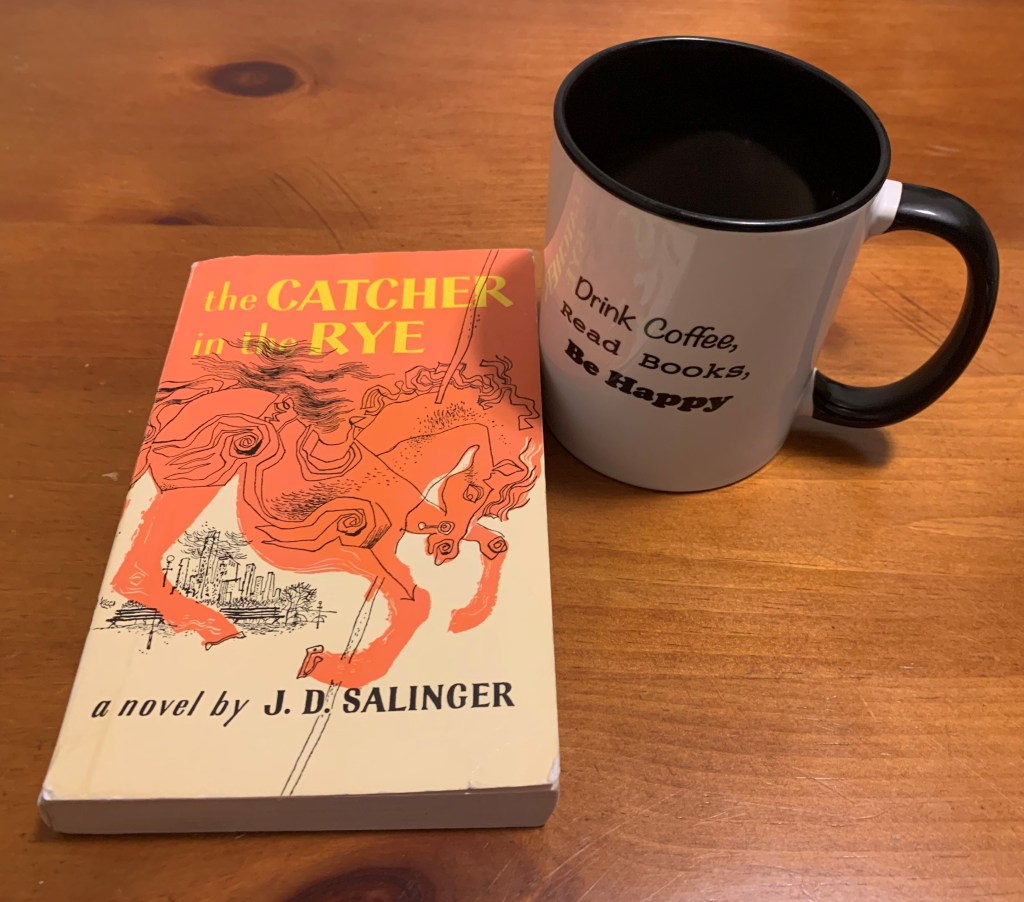
The Catcher in the Rye is famous – or infamous – depending on who you ask. While hailed as an important piece of classic literature, many people associate it with the assassination of John Lennon (myself included, as a huge Beatles fan) because his murderer claimed to be a real-life Holden Caulfield.
Written by J.D. Salinger and published in novel form in 1951, The Catcher in the Rye is a story that follows a young adult’s struggles. In this post, I wanted to analyze Holden, as his being an unreliable narrator allows for many different interpretations of his character.
Holden Caulfield is presented as an apathetic, seemingly troubled teenager from the first pages of the novel. For a while, it’s difficult to understand the cause of his feelings; although, it can be inferred to some degree that the death of his brother could be part of it.
To me, however, it appears that his state of mind may not be easily chalked up to simple teenage angst, or even grief. Holden’s thoughts and actions throughout the novel suggest (to me) a heavy leaning towards him suffering from Bipolar I.
In simple terms, Bipolar I (for anyone who does not have an encyclopedic knowledge of mental disorders) is a mental illness that affects the mood of a person, causing fluctuations between extreme highs and extreme lows.
And guess what? Holden displays both, which he cycles rapidly through over the four days the story takes place over.
During the highs – or manic episodes – of Bipolar I, a person may display symptoms of risky behaviors such as unsafe sex, excessive spending, and elated mood, all of which Holden does at some point. He hires a prostitute in a hotel elevator (although, he does not engage in sexual activity with her). At the beginning of the novel, Holden claims to be “pretty loaded,” but by the end, he has to ask his younger sister to loan him money because he spent all of his over three or four days. His mood shifts quickly between manic and the other side of the Bipolar spectrum: depression.
During the lows – or depressive episodes – a person might experience depression, suicidal thoughts or actions, and a lack of interest. These are also things Holden goes through. Holden talks about death a lot throughout the story, both in regards to his brother Allie and himself. He originally intended to sleep with a prostitute, but then backs out, commenting that he felt “more depressed than sexy”.
Towards the end, he decides to run away; after he tells his younger sister, they fight about it. Then, Holden feels bad for making her cry, so he takes her to ride a merry-go-round. He says that he suddenly feels so happy he could cry. Immediately after in the last chapter, he mentions vaguely that he got sick and states that he talks to a psychoanalyst “they have here” (however, he never specifies where “here” is, so it could be inferred that it is either a medical hospital or mental hospital). While the ending is vague, my interpretation is that Holden suffered a mental breakdown.
In conclusion (yes, I am using a formal ending because why not?), it seems to me that Holden is not simply an “angsty teenager” but a youth plagued by a serious mental illness.
This post was a bit different than my usual postings (more formal and academic), but I hope you enjoyed reading it anyway. Thanks for coming to my TedTalk. 😁
Read More

One Sentence Story #76
One Sentence Story #76

Fine
A short creative non-fiction piece.
Meme Monday
It’s Meme Monday, everyone!
Something went wrong. Please refresh the page and/or try again.
 Savannah Watson
Leave a comment